
Introduction
Have you ever noticed how the same building can look completely different after sunset?
During the day, sunlight reveals its structure, materials, colours and architectural details. Once darkness arrives, however, those natural visual elements begin to disappear. What people notice next depends largely on one thing: light.
This is where architectural lighting becomes important.
Lighting can change the way a building feels without changing the building itself. A carefully illuminated façade can appear elegant and sophisticated, while poor lighting can make the same architecture look flat, harsh or uninviting.
For villas, hotels, commercial properties and landmark developments, lighting is therefore not simply about visibility. It is about creating an experience.
In Dubai, where striking architecture is an important part of the city’s identity, professionally planned architectural lighting in Dubai can help properties maintain their visual presence long after the sun goes down.
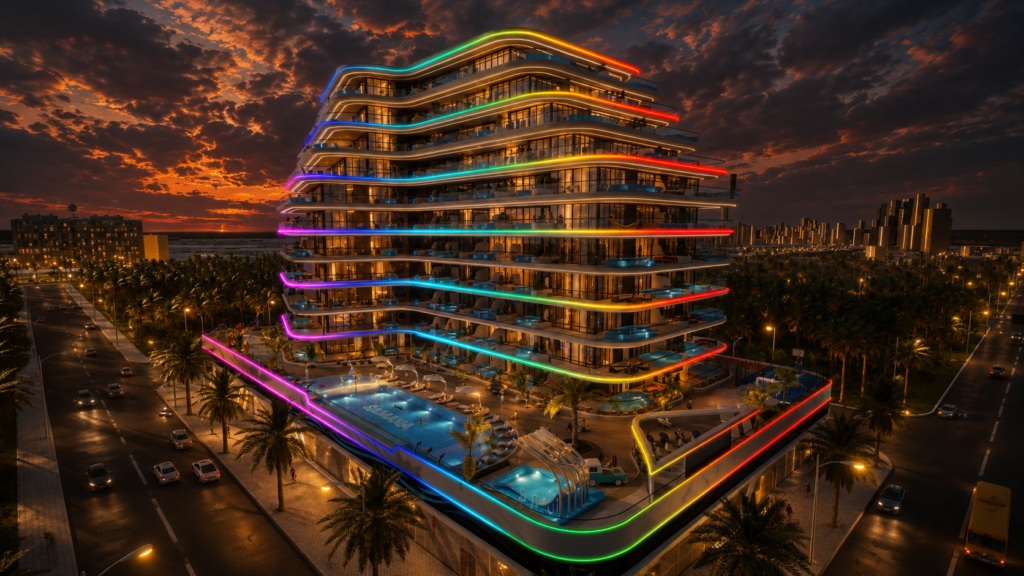
What Is Architectural Lighting?
Architectural lighting is the planned use of artificial light to enhance the appearance, character and functionality of a building or architectural environment.
It involves much more than choosing LED fixtures and installing them on a façade.
A professional lighting design considers:
The building’s shape
Architectural details
Surface materials
Colours and textures
Entrances
Landscaping
Viewing angles
Light intensity
Beam angles
Colour temperature
Shadows
Glare
Energy consumption
Maintenance requirements
The purpose is to make the architecture easier to understand and more visually appealing after dark.
The best lighting is often not the lighting that attracts attention to the fixtures.
It is the lighting that makes people notice the architecture itself.
Why Does a Building Look Different After Sunset?
During daylight, sunlight naturally creates highlights and shadows across a building.
At night, this natural illumination disappears.
Artificial lighting now determines which parts of the structure remain visible.
For example, a carefully positioned light can make a column appear more prominent. A concealed linear LED can emphasise a roofline. A narrow beam can reveal a textured wall. Accent lighting can make an entrance the main focal point.
In other words, lighting creates a new visual hierarchy.
The building remains unchanged.
The way people experience it changes.
The Psychology of Architectural Lighting
Lighting affects human perception in several ways.
People naturally respond to brightness, contrast, colour and direction. These elements can influence attention, mood and the perceived character of a space.
Understanding these principles helps lighting designers create environments that feel intentional rather than randomly illuminated.
- Light Directs Attention
One of the simplest psychological effects of lighting is its ability to attract attention.
When one part of a building is brighter than its surroundings, the eye is naturally drawn toward it.
This can be useful for highlighting:
Main entrances
Building names
Architectural features
Columns
Sculptures
Signage
Decorative elements
A hotel, for example, may use stronger illumination around its main entrance while keeping secondary areas more subtle.
This creates a clear visual hierarchy.
Instead of making everything equally bright, the lighting tells people:
“Look here first.”
- Light Creates Depth
A façade can look completely flat when it is illuminated evenly.
Strategic lighting introduces contrast between bright and dark areas.
This can reveal:
Recessed surfaces
Projections
Columns
Curves
Textured materials
Structural details
The result is greater visual depth.
This technique is especially valuable for large buildings because it allows their architectural form to remain visible at night.
- Light Influences Mood
Different types of lighting can create different emotional impressions.
Warm illumination is often associated with:
Comfort
Relaxation
Luxury
Hospitality
Warmth
This makes it suitable for villas, hotels, restaurants and residential properties.
Cooler lighting can create a feeling of:
Modernity
Technology
Cleanliness
Precision
It can be appropriate for contemporary offices, commercial buildings and technology-oriented spaces.
The choice should always reflect the architecture and purpose of the property.
- Shadows Are Part of the Design
Good architectural lighting is not about removing every shadow.
In fact, shadows can make architecture more interesting.
Imagine a textured stone wall illuminated directly from the front.
The surface may appear relatively flat.
Now imagine a light positioned at a lower angle across the surface.
Small changes in texture create highlights and shadows.
Suddenly, the wall has depth.
This technique can enhance:
Stone
Concrete
Brick
Metal
Decorative surfaces
Columns
Sculptural architecture
This is why experienced lighting designers carefully balance light and darkness.
- Lighting Can Create a Sense of Luxury
Luxury is influenced by more than the materials used in a property.
It is also influenced by how those materials are presented.
A premium stone façade, for example, can lose its visual impact if it is covered in excessive or poorly positioned light.
A carefully controlled lighting system can instead reveal the texture and colour of the material.
The result can feel more refined.
This is one reason property developers and owners often invest in the best architectural lighting in Dubai for high-end residential and commercial projects.
Architectural Lighting in Dubai
Dubai’s architecture creates a unique environment for lighting design.
The city features:
Luxury villas
High-rise towers
Hotels
Shopping centres
Corporate buildings
Residential developments
Restaurants
Entertainment destinations
Landmark structures
Many of these properties need to remain visually attractive after sunset.
This makes architectural lighting in Dubai an important consideration for architects, developers, property owners and hospitality businesses.
A well-designed lighting system can help:
Strengthen visual identity
Highlight architectural features
Improve nighttime visibility
Create a premium appearance
Enhance entrances
Support branding
Complement landscaping
Improve the overall visitor experience
The objective isn’t simply to make the building brighter.
It is to make the building more visually meaningful at night.
Architectural Lighting for Villas
Luxury villas often require a subtle and sophisticated lighting approach.
Instead of illuminating every surface, lighting can be concentrated on key architectural features.
These may include:
Entrance gates
Columns
Facades
Balconies
Boundary walls
Pathways
Gardens
Water features
Decorative elements
For example, warm lighting can create a welcoming entrance while concealed fixtures canhighlight architectural lines without becoming visually distracting.
This is particularly important for high-end residential properties where the lighting should complement the architecture rather than overpower it.
Architectural Lighting for Hotels
Hotels depend heavily on visual presentation.
Guests form an impression of a hotel before they enter the building.
The exterior can communicate:
Luxury. Comfort. Quality. Hospitality.
Architectural lighting can be used to enhance:
Main entrances
Hotel façades
Canopies
Landscaping
Signage
Architectural details
Outdoor guest areas
A well-designed hotel lighting scheme can also help the property stand out from surrounding buildings.
For hospitality projects, lighting becomes part of the overall guest experience.
Architectural Lighting for Commercial Buildings
Commercial buildings have a different objective.
Their lighting often needs to support visibility, professionalism and brand identity.
Lighting can highlight:
Corporate architecture
Building entrances
Signage
Structural elements
Vertical lines
Glass façades
Unique architectural details
A commercial property that remains recognisable after sunset can maintain a stronger visual presence within its surroundings.
This can be especially useful for prominent offices, retail developments and corporate headquarters.
The Role of LED Lights in Dubai
Modern LED lights in Dubai are widely used for architectural and exterior lighting applications.
LED technology provides flexibility in:
Brightness
Colour temperature
Beam angles
Fixture sizes
Colour options
Control systems
Depending on the project, LED fixtures can be used for:
Façade illumination
Wall washing
Grazing
Linear lighting
Accent lighting
Landscape lighting
Pathway lighting
Dynamic lighting
However, choosing an LED fixture is only one part of the process.
The position, beam angle and intensity of the light are equally important.
A powerful fixture installed in the wrong location can produce glare or unwanted shadows.
A carefully selected fixture can reveal an architectural feature with much less visual distraction.
Warm White, Cool White or Dynamic Colour?
Colour plays an important role in architectural lighting.
Warm White
Warm white lighting can work particularly well with:
Natural stone
Luxury villas
Hotels
Restaurants
Hospitality spaces
It can create a warm and welcoming atmosphere.
Neutral White
Neutral lighting can be suitable for:
Commercial buildings
Contemporary architecture
Offices
Modern facades
Dynamic Colour
RGB and programmable lighting can create more dramatic effects.
Dynamic systems can be useful for:
Events
Celebrations
Festivals
Entertainment venues
Landmark buildings
Brand activations
The key is to use colour with purpose.
If every part of the building is constantly changing colour, the architecture can become secondary.
How Lighting Guides the Eye
Imagine walking toward a hotel at night.
First, you notice the building.
Then your attention moves toward the entrance.
The pathway guides you forward.
Landscape lighting creates depth around the property.
Finally, the entrance becomes the main focal point.
This experience can be created through lighting hierarchy.
Professional lighting design considers:
What should people notice first?
What should they notice next?
Where should their attention finish?
This is one of the most important differences between simply installing lights and designing architectural lighting.
Common Architectural Lighting Mistakes
- Overlighting
Making every surface extremely bright can eliminate contrast and make a building look flat.
- Poor Fixture Placement
Incorrect fixture positions can create glare and unwanted shadows.
- Ignoring Architecture
Lighting should reveal the building’s design instead of competing with it.
- Using Too Many Colours
Dynamic colour can be powerful, but excessive colour changes can distract from the architecture.
- Ignoring Maintenance
Outdoor fixtures need regular inspection and maintenance.
- Choosing Fixtures Only by Brightness
A brighter fixture isn’t necessarily a better fixture.
Beam angle, optics, placement and application are equally important.
Smart Lighting Solutions in Dubai
Modern lighting solutions in Dubai can now incorporate smart control systems.
Depending on the project, lighting can be programmed according to:
Time of day
Events
Seasons
Special occasions
Operating schedules
Energy requirements
Dynamic lighting systems can also allow building owners to create different lighting scenes.
For example, a property might use a subtle lighting scene during normal evenings and a dynamic colour scene during an event.
Smart controls can therefore provide greater flexibility while helping manage lighting operation.
Why Lighting Should Be Planned Early
Architectural lighting should ideally be considered during the design stage of a project.
Early planning allows teams to consider:
Fixture locations
Mounting points
Cable routes
Electrical requirements
Beam angles
Glare control
Maintenance access
Lighting controls
When lighting is planned early, fixtures can often be integrated more naturally into the architecture.
This can create a cleaner daytime appearance and a stronger nighttime result.
How to Choose an Architectural Lighting Company in Dubai
Choosing a lighting company should not be based only on product availability.
Consider whether the company understands:
Architectural design
Lighting applications
Fixture selection
Outdoor environments
Control systems
Installation
Testing
Maintenance
A professional architectural lighting company in Dubai should be able to understand the building first and recommend lighting based on the project’s actual requirements.
The right partner should help connect:
Design + Technology + Installation + Performance
Why AILED Lighting?
AILED Lighting focuses on customised lighting solutions designed to complement architectural spaces.
The company provides solutions for applications including:
Façade lighting
Exterior lighting
Landscape lighting
DMX lighting
Smart lighting
LED lighting
Architectural illumination
AILED Lighting’s approach combines lighting technology with project-specific requirements to create lighting systems that support the visual identity of buildings.
For architects, developers, property owners and businesses, the goal should always be the same:
Create lighting that enhances the architecture instead of hiding it.
The Future of Architectural Lighting
Architectural lighting is moving toward greater control, flexibility and integration.
Modern projects can combine:
LED technology
Smart controls
DMX systems
Automated scheduling
Programmable scenes
Energy-conscious operation
This means buildings can have different lighting identities depending on the occasion.
A commercial building can maintain a subtle appearance during regular hours and use a dynamic scene for a special event.
A hotel can create different lighting moods throughout the evening.
A landmark building can respond to festivals and celebrations.
The possibilities continue to expand.
But technology should always have a purpose.
The best lighting technology is the technology that improves the architectural experience.
Why Architectural Lighting Is More Than Illumination
A wall can become a texture.
A column can become a focal point.
An entrance can become an experience.
A hotel can become a landmark.
A commercial building can become more recognisable.
This is the real value of architectural lighting.
It doesn’t change the physical structure.
It changes the way people experience the structure.
Conclusion
A building doesn’t stop communicating when the sun goes down.
In many cases, its nighttime appearance becomes a completely different form of architectural expression.
The right architectural lighting can influence how people perceive a building’s size, depth, quality, character and identity.
For villas, hotels, commercial properties and landmark developments, carefully planned lighting can transform an ordinary nighttime façade into a memorable visual experience.
In Dubai’s competitive architectural environment, lighting should not be treated as an afterthought.
It should be considered as part of the building’s identity from the beginning.
The goal isn’t simply to add more light.
It is to create the right light, in the right location, for the right architectural purpose.
And when architecture and lighting work together, a building can become something entirely different after sunset.
Great architecture doesn’t disappear at night. With the right lighting, it comes alive.
Frequently Asked Questions
- What is architectural lighting?
Architectural lighting is the planned use of artificial light to enhance the appearance, character and functionality of a building.
- Why is architectural lighting important?
It can highlight architectural features, create depth, improve nighttime visibility and influence how people perceive a building.
- What is the best architectural lighting in Dubai?
There is no single lighting solution that is best for every property. The right solution depends on the building’s architecture, materials, location, purpose and desired appearance.
- Is LED lighting suitable for architectural projects?
Yes. LED lights offer flexibility in brightness, colour temperature, beam angles, fixture designs and control systems, making them suitable for many architectural applications.
- Can architectural lighting be used for villas?
Yes. Architectural lighting can highlight villa entrances, facades, columns, landscaping, pathways, balconies and other architectural details.