
Introduction
Architectural lighting design can completely change how a building looks and feels after sunset. The same building can appear warm and luxurious, clean and professional, or vibrant and dynamic depending on the colour of light used.
It is not simply about selecting bright LED fixtures. Effective architectural lighting design involves understanding the building’s architecture, purpose, surroundings, materials, and the visual atmosphere you want to create.
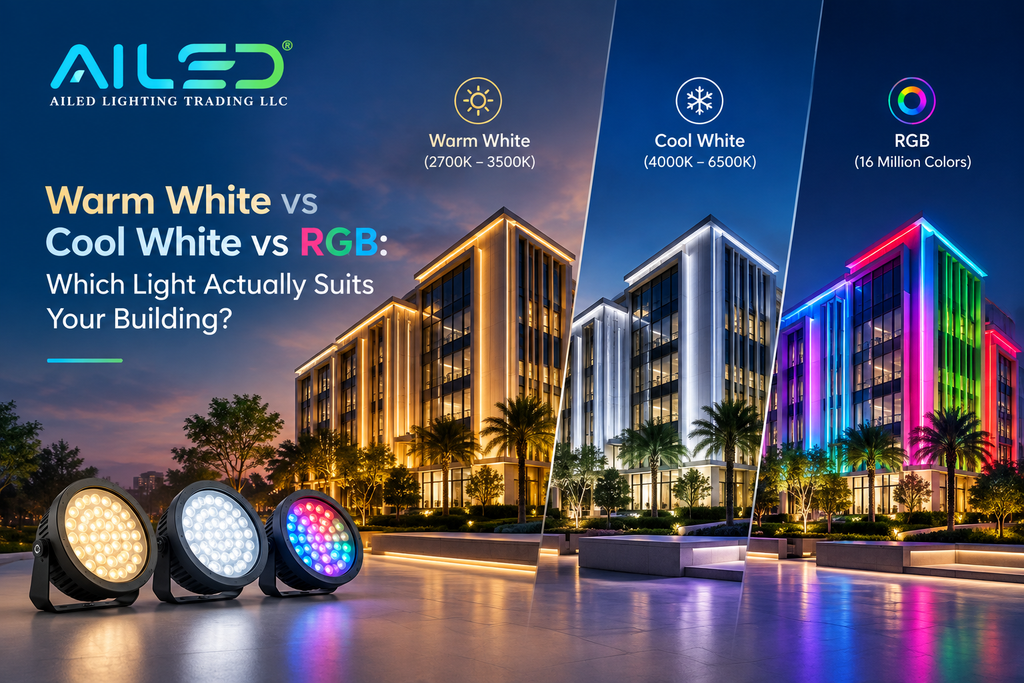
Among the most commonly considered lighting options are warm white, cool white, and RGB lighting. Each has its own advantages and works better for specific architectural applications.
So, which one is right for your building?
Let’s compare all three and understand how to make the right choice.
What Is Architectural Lighting Design?
Architectural lighting design is the process of planning and positioning lighting to enhance the appearance, structure, and functionality of a building.
Instead of simply illuminating a space, architectural lighting highlights important architectural features such as:
- Building facades
- Columns and entrances
- Rooflines
- Windows
- Textures and materials
- Landscaping
- Pathways
- Commercial signage
- Outdoor structures
A professional architectural lighting designer considers factors such as brightness, colour temperature, beam angle, fixture placement, energy efficiency, and lighting control.
The objective is to make the architecture stand out while maintaining visual comfort and functionality.
Warm White Lighting: Elegant and Comfortable
Warm white lighting typically creates a soft, welcoming appearance. It produces a warmer visual atmosphere that can make architectural surfaces appear more luxurious and inviting.
Warm white is particularly suitable for:
- Villas
- Hotels
- Restaurants
- Residential buildings
- Luxury properties
- Heritage-style architecture
- Garden areas
- Outdoor seating areas
For buildings where the goal is elegance rather than high-intensity illumination, warm white can be an excellent choice.
For example, warm white facade lighting can highlight stone, wood, beige, cream, and other warm-toned architectural materials.
Why Choose Warm White?
Warm white lighting can:
- Create a luxurious appearance
- Make outdoor areas feel welcoming
- Highlight textures
- Complement traditional architecture
- Create a comfortable evening atmosphere
It is especially useful when the lighting needs to blend naturally with the building rather than dominate it.
Cool White Lighting: Modern and Professional
Cool white lighting creates a brighter and cleaner visual appearance. It is often associated with modern architecture, commercial buildings, offices, and contemporary structures.
Cool white can work particularly well for:
- Office buildings
- Shopping malls
- Commercial properties
- Modern apartments
- Corporate buildings
- Contemporary facades
- Parking and entrance areas
A cool white lighting scheme can make sharp architectural lines and modern materials more visible.
Glass, concrete, metal, and other contemporary materials can benefit from carefully positioned cool white lighting.
Why Choose Cool White?
Cool white lighting can:
- Create a modern appearance
- Emphasize architectural details
- Improve visual clarity
- Complement contemporary buildings
- Create a professional atmosphere
However, excessive brightness can make a building look harsh. This is why proper planning is an important part of architectural lighting design.
RGB Lighting: Creative and Dynamic
RGB lighting offers something different. Instead of producing one fixed colour temperature, RGB fixtures can create a wide range of colours.
This makes RGB lighting useful when a building needs to change its appearance for different events, seasons, campaigns, or celebrations.
RGB lighting can be used for:
- Hotels
- Entertainment venues
- Shopping centres
- Event spaces
- Landmark buildings
- Restaurants
- Resorts
- Public spaces
For example, a building could use one colour scheme during normal evenings and completely change its lighting for a festival, corporate event, national celebration, or promotional campaign.
Why Choose RGB?
RGB lighting provides:
- Multiple colour options
- Dynamic lighting effects
- Programmable scenes
- Event-based lighting
- Greater visual flexibility
- Strong branding opportunities
However, RGB should be used strategically. Too many colours or excessive movement can distract from the architecture.
The best architectural lighting solutions use colour to support the building’s identity rather than overwhelm it.
Warm White vs Cool White vs RGB: Which One Is Better?
There is no single lighting colour that works for every building.
The right option depends on the building type and the desired visual effect.
| Lighting Type | Best For | Main Effect |
|---|---|---|
| Warm White | Villas, hotels, luxury buildings | Elegant and welcoming |
| Cool White | Offices, commercial buildings | Modern and professional |
| RGB | Events, landmarks, entertainment spaces | Dynamic and creative |
For many projects, combining different lighting types can provide the best result.
For example, a building may use warm white lighting for architectural details and RGB lighting for selected accent areas.
Architectural Lighting vs Decorative Lighting
Understanding architectural lighting vs decorative lighting is also important when planning a project.
Architectural lighting focuses primarily on enhancing the structure and features of a building.
Decorative lighting, on the other hand, is generally used to add visual style, ambience, or ornamentation.
For example:
Architectural lighting:
- Highlights columns
- Accentuates facade textures
- Defines building edges
- Enhances entrances
- Creates depth on facades
Decorative lighting:
- Adds visual ornaments
- Creates ambience
- Enhances interior décor
- Provides aesthetic accents
A successful project can use both approaches together. The key is maintaining balance so that decorative elements do not hide or compete with the architecture.
How to Choose the Right Colour for Your Building
Before selecting warm white, cool white, or RGB, consider these factors.
1. Building Type
The purpose of the building should influence your lighting selection.
A luxury villa may benefit from warm white, while a corporate office may look better with cool white.
Entertainment and landmark buildings may benefit from RGB.
2. Architectural Materials
Different materials react differently to light.
Stone, wood, and warm-coloured finishes often work well with warm white.
Glass, steel, concrete, and modern surfaces can work effectively with cool white.
RGB can be used as an accent to create contrast and visual interest.
3. Surrounding Environment
The surrounding area also matters.
A building in a residential neighbourhood may require subtle lighting, while a commercial landmark may need stronger visual impact.
A professional architectural lighting company can assess the surroundings before recommending the appropriate lighting approach.
4. Desired Brand Image
Commercial buildings should also consider brand identity.
A hotel may want an elegant appearance, while a retail or entertainment venue may want a more energetic visual identity.
RGB lighting can be particularly useful when colour plays an important role in branding.
5. Lighting Controls
Modern lighting systems can provide greater control over brightness, colours, schedules, and lighting scenes.
With intelligent controls, a building can use different lighting settings depending on the time, event, or occasion.
This makes lighting more flexible and can help improve energy management.
Architectural Lighting Solutions for Dubai Buildings
Dubai is known for its modern architecture, luxury properties, hotels, commercial developments, and visually impressive facades.
Because buildings are often designed to stand out after sunset, carefully planned architectural lighting design can play an important role in creating a strong nighttime identity.
For projects in Dubai, lighting may be used to highlight:
- High-rise facades
- Luxury villas
- Hotels and resorts
- Commercial towers
- Retail buildings
- Landscapes
- Entrance structures
- Architectural features
The harsh outdoor environment also makes fixture quality, durability, installation, and maintenance important considerations.
When selecting an architectural lighting company, property owners and project managers should look beyond fixture selection and consider the complete lighting solution, including design, installation, controls, maintenance, and long-term performance.
Why Work With AILED Dubai?
For projects that require professional lighting planning, AILED Dubai can provide architectural lighting solutions designed around the building and its intended visual effect.
A professional lighting approach can help determine whether warm white, cool white, RGB, or a combination of lighting technologies is most suitable.
The objective should not simply be to make a building brighter.
It should be to make the building look better, more distinctive, and more visually balanced after dark.
Final Thoughts
Warm white, cool white, and RGB lighting each have a different purpose.
Warm white is ideal for elegance, comfort, and luxury.
Cool white works well for modern, clean, and professional architectural environments.
RGB provides flexibility, creativity, and dynamic colour effects.
The best result comes from choosing lighting based on the architecture rather than simply choosing the most powerful or colourful option.
With the right architectural lighting design, even a simple building can develop a strong nighttime identity. The combination of appropriate colour temperature, fixture placement, brightness, controls, and architectural features can transform how a property is perceived after sunset.
Whether you are developing a villa, hotel, office, commercial building, or landmark project in Dubai, selecting the right architectural lighting solutions can make a significant difference to the final appearance.