
Introduction
Building facade lighting does not need to make a structure the brightest on the street. In architectural lighting, the real skill lies in knowing where to add light, where to reduce it, and where to leave darkness untouched.
This is the principle behind effective building facade lighting. Instead of covering an entire exterior with powerful fixtures, controlled illumination uses carefully positioned lights, appropriate brightness levels, colour temperatures, beam angles, and lighting sequences to emphasize the architecture.
When thoughtfully designed, facade lighting can highlight textures, columns, entrances, windows, curves, rooflines, and architectural details while maintaining visual comfort.
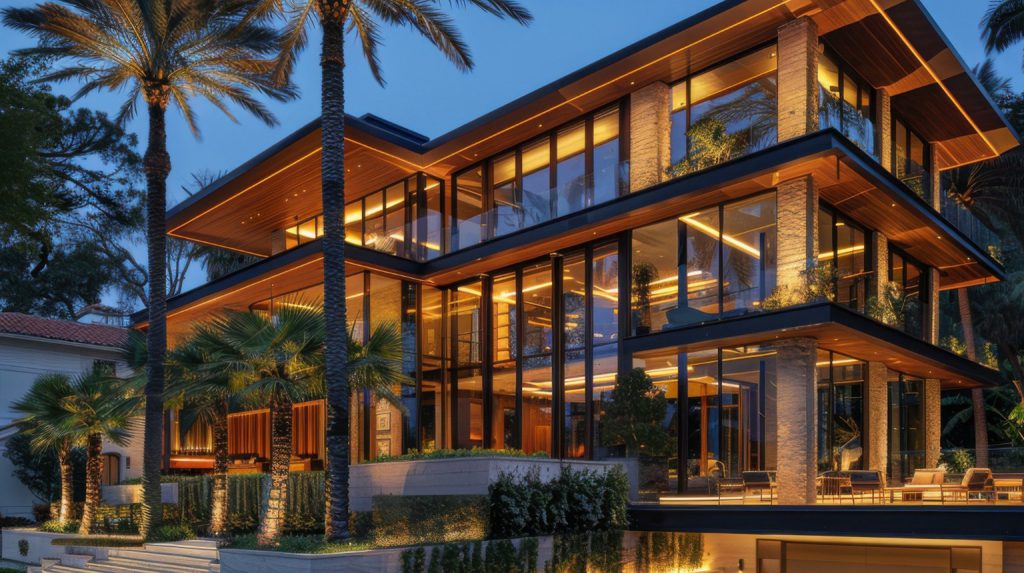
This approach is particularly important in modern cities such as Dubai, where residential towers, hotels, commercial buildings, villas, and landmark structures compete for attention after sunset. Good facade lighting Dubai projects should create visual impact without producing unnecessary glare, excessive brightness, or light pollution.
In this guide, we explore how to illuminate a building effectively without over-lighting it and how professional building facade lighting design can transform architecture through controlled illumination.
What Is Controlled
Controlled facade lighting is an architectural lighting approach that focuses on precision rather than maximum brightness.
Instead of asking:
“How much light can we put on this building?”
A professional lighting designer asks:
“Which architectural elements deserve attention, and how much light do they actually need?”
This difference can completely change the appearance of a building at night.
Controlled building facade lighting typically considers:
Architectural form
Surface materials
Building height
Surrounding environment
Viewing distance
Light intensity
Beam angle
Colour temperature
Glare control
Energy consumption
Maintenance requirements
Lighting schedules
Neighbouring properties
Pedestrian and vehicle visibility
The objective is to create a balanced nighttime composition where important architectural elements stand out naturally.
Why Over-Lighting a Building Can Be a Problem
More light does not automatically mean better lighting.
When every wall, window, column, edge, and architectural feature is illuminated at the same intensity, the building can lose its visual hierarchy.
Some common problems caused by excessive facade illumination include:
- Loss of Architectural Depth
If every surface receives the same amount of light, shadows disappear. Without shadows, building details can appear flat.
- Excessive Glare
Poorly positioned fixtures can create uncomfortable glare for pedestrians, drivers, residents, and neighbouring properties.
- Higher Energy Consumption
Using excessive numbers of high-output fixtures increases electricity consumption without necessarily improving the visual result.
- Light Pollution
Uncontrolled light can spill into the surrounding environment and contribute to unnecessary nighttime brightness.
- Visual Competition
A building that is dramatically brighter than its surroundings can become visually distracting rather than attractive.
- Higher Maintenance Requirements
More fixtures mean more components that may eventually require inspection, cleaning, replacement, or repair.
This is why successful exterior facade lighting should always balance visual impact with efficiency and environmental responsibility.
The Importance of Building Facade Lighting Design
A successful building facade lighting design begins before the first fixture is installed.
The designer needs to understand the architecture and determine which elements should become visual focal points.
For example, a commercial building may have:
A distinctive entrance
Vertical architectural fins
Glass curtain walls
Decorative columns
Roofline features
Recessed sections
Textured stone surfaces
Instead of illuminating everything equally, lighting can be layered around these features.
The result is a building with visual hierarchy.
The eye naturally moves toward the brightest or most interesting architectural elements while secondary areas remain softer.
This creates depth and sophistication.
The Three Layers of Effective Facade Illumination
A professional lighting strategy often works through multiple layers rather than one uniform lighting system.
- Base Illumination
Base lighting provides enough illumination to establish the overall form of the building.
It should not necessarily make every surface equally bright.
The purpose is to give the structure a nighttime presence while maintaining areas of shadow.
- Architectural Accent Lighting
Accent lighting highlights important architectural elements.
Examples include:
Columns
Arches
Entrance structures
Rooflines
Sculptural features
Textured walls
Vertical fins
Decorative details
Accent lighting is often where the character of the building becomes visible.
- Feature or Dynamic Lighting
Dynamic lighting can be introduced for selected architectural elements.
This may include:
Colour-changing LEDs
Animated lighting
Chasing effects
Programmable sequences
Media displays
Event-based lighting
However, dynamic lighting should be used strategically.
A building does not need constant movement to appear modern.
In many cases, subtle changes can create a stronger and more elegant result.
Choosing the Right Front Facade Lights
The selection of front facade lights depends on the architecture, surface material, mounting position, and desired lighting effect.
Different fixtures can produce very different results.
For example:
Wall Washers
Wall washers distribute light across larger surfaces and can emphasize architectural materials.
Linear LED Fixtures
Linear LEDs can be integrated into architectural edges, grooves, rooflines, and vertical structures.
Spotlights
Spotlights are useful when a specific architectural element needs focused attention.
In-Ground Fixtures
These can create upward lighting effects on columns, walls, trees, and structural features.
Grazing Fixtures
Grazing lighting is particularly effective for textured materials because it reveals surface depth and patterns.
Choosing the fixture should always come after understanding the architecture, not simply because a fixture has a high lumen output.
LED Building Facade Lighting: Efficiency Meets Flexibility
Modern LED building facade lighting has changed the possibilities available to architects and lighting designers.
LED technology offers several advantages, including:
High energy efficiency
Long operating life
Compact fixture sizes
Flexible colour options
Precise beam control
Digital control capabilities
Lower maintenance requirements
Programmable lighting scenes
A well-designed LED building facade can therefore achieve strong architectural impact without relying on excessive fixture quantities.
However, LED technology itself does not guarantee good lighting.
A poorly designed LED installation can still create glare, hotspots, uneven illumination, and unnecessary brightness.
The design remains the most important factor.
House Facade Lighting Requires a Different Approach
Large commercial structures and residential properties should not necessarily be illuminated using the same strategy.
House facade lighting generally focuses on creating a welcoming, elegant, and comfortable appearance.
Residential lighting can highlight:
Main entrances
Balconies
Boundary walls
Landscaping
Architectural columns
Roof edges
Driveways
Texturedexterior walls
For homes, subtle lighting is often more effective than intense illumination.
A few carefully positioned fixtures can create attractive shadows and depth without making the entire property appear excessively bright.
Building Facade Lighting in Dubai
Dubai’s architectural landscape includes high-rise towers, luxury villas, hotels, shopping destinations, offices, cultural buildings, and large commercial developments.
This makes building facade lighting in Dubai an important part of nighttime architectural identity.
However, Dubai’s urban environment also makes controlled lighting particularly valuable.
Buildings need to be visible and visually distinctive while maintaining consideration for:
Pedestrian comfort
Traffic visibility
Neighbouring buildings
Energy consumption
Maintenance access
Harsh outdoor conditions
Heat exposure
Dust and environmental conditions
Professional facade lighting Dubai solutions should therefore be designed specifically for the building and its surroundings rather than copied from another project.
Building Facade Lighting Examples: What Works?
There is no single formula for successful facade illumination, but several approaches consistently produce strong results.
Example 1: Highlighting Vertical Architecture
A tall building with vertical fins can use narrow-beam fixtures to emphasize its vertical structure.
Instead of illuminating the complete wall, the lighting follows the building’s natural lines.
This makes the structure appear taller and more defined.
Example 2: Textured Stone Facade
A textured stone facade can benefit from grazing light.
The light travels close to the surface, revealing shadows created by the texture.
This creates depth without requiring extreme brightness.
Example 3: Luxury Villa
A villa can combine soft wall illumination with accent lighting around entrances, landscaping, and architectural details.
The result is an elegant nighttime appearance rather than a brightly illuminated exterior.
Example 4: Commercial Building
A commercial property may use a combination of linear LEDs and accent fixtures to emphasize its brand identity and architectural form.
Lighting scenes can also be scheduled according to operating hours and special occasions.
What Is an LED Media Facade?
An LED media facade goes beyond conventional architectural illumination.
Instead of simply illuminating architectural surfaces, media facades can display:
Graphics
Animations
Patterns
Branding
Event content
Digital artwork
Dynamic colour sequences
Media facades can be visually powerful, particularly for entertainment venues, shopping destinations, hotels, and landmark buildings.
But controlled illumination is still important.
If every building uses intense animated lighting continuously, visual fatigue can occur.
The strongest media facade projects understand when to create movement and when to allow the architecture itself to dominate.
Smart Control Is Essential for Modern Facade Lighting
One of the most effective ways to prevent over-lighting is to introduce intelligent control systems.
Modern lighting controls can allow building owners to adjust:
Brightness
Colour
Lighting scenes
Operating schedules
Dynamic effects
Individual zones
Event programming
For example, a building could operate with one lighting level during the evening, reduce brightness later at night, and switch selected architectural elements off during low-activity periods.
This approach can reduce unnecessary energy use while maintaining the building’s nighttime identity.
Colour Temperature Matters
The colour temperature selected for a facade can dramatically influence its appearance.
Warm white lighting can create a comfortable and luxurious atmosphere.
Neutral white can provide a clean and contemporary appearance.
Cooler white lighting can create a sharper, more modern effect.
The best choice depends on:
Building materials
Architectural style
Surrounding environment
Brand identity
Desired atmosphere
Viewing distance
Using multiple colour temperatures without a clear design strategy can make a facade appear visually inconsistent.
Avoiding Glare in Exterior Facade Lighting
Glare is one of the most overlooked aspects of outdoor lighting.
A fixture can produce beautiful illumination on a wall while simultaneously creating uncomfortable brightness for people viewing the building from another direction.
Professional exterior facade lighting should therefore consider the fixture’s:
Mounting height
Orientation
Beam angle
Shielding
Output
Viewing direction
Fixtures should be positioned so that the light reaches the intended architectural surface without unnecessarily entering people’s direct field of vision.
Facade Lighting Installation: What Should Be Considered?
A good design can still fail if the installation is not executed correctly.
During facade lighting installation, several practical factors should be considered.
Fixture Positioning
Small changes in fixture location can significantly alter the lighting effect.
Cable Management
Cabling should be carefully routed and protected to maintain a clean architectural appearance.
Weather Protection
Outdoor fixtures must be appropriate for the environmental conditions in which they will operate.
Access for Maintenance
Fixtures should be positioned with future maintenance in mind.
Structural Integration
Where possible, lighting equipment should be integrated into the architecture rather than appearing as an afterthought.
Testing at Night
Nighttime testing is essential because the final appearance cannot always be predicted accurately during daylight.
How AILED Approaches Facade Lighting
For projects requiring professional architectural illumination, AILED facade lighting can focus on combining lighting technology with architectural intent.
Rather than simply adding more fixtures, a controlled approach can consider the building’s shape, materials, viewing angles, and desired nighttime identity.
AILED solutions can be considered for applications such as:
Architectural facade lighting
Commercial building illumination
Villa and residential facade lighting
Dynamic LED systems
Feature lighting
Linear LED applications
Media facade concepts
Smart lighting control
The objective is to create lighting that complements architecture rather than overwhelming it.
Why Working With Facade Lighting Manufacturers in Dubai Matters
Choosing experienced facade lighting manufacturers in Dubai can provide important advantages for architectural projects.
Manufacturing and technical expertise can help with:
Fixture selection
Optical performance
Custom lighting requirements
Product specifications
Outdoor suitability
Installation support
Control systems
Project-specific solutions
For large-scale architectural projects, product selection should not be based solely on appearance.
Performance, reliability, optical control, environmental suitability, installation requirements, and long-term maintenance should all be considered.
7 Practical Principles for Avoiding Over-Lighting
If you are planning a facade lighting project, these principles can help maintain visual balance.
- Start With the Architecture
Understand the building before deciding where the lights go.
- Identify Focal Points
Choose the architectural elements that deserve the most attention.
- Use Contrast
Dark areas are important. They help illuminated features stand out.
- Control Beam Angles
Direct light precisely toward the intended surface.
- Avoid Excessive Brightness
Use only the amount of illumination required to achieve the desired visual effect.
- Introduce Lighting Zones
Divide the facade into controllable sections so brightness can be adjusted independently.
- Review the Building From Multiple Angles
A lighting design should be evaluated from streets, pedestrian areas, nearby buildings, and longer viewing distances.
The Future of Building Facade Lighting
Facade lighting is becoming increasingly connected with smart building technologies.
Future systems are likely to place greater emphasis on:
Automated brightness control
Energy monitoring
Sensor-based operation
Smart scheduling
Remote management
Dynamic architectural lighting
Interactive lighting
Advanced LED systems
The focus is also shifting from simply making buildings brighter to making lighting more intelligent and purposeful.
This is an important change.
The future of architectural lighting is not necessarily about more light.
It is about better-controlled light.
Conclusion
The art of building facade lighting is not about illuminating every surface equally. It is about understanding architecture and using light selectively to reveal its strongest characteristics.
A successful lighting design creates hierarchy, depth, contrast, atmosphere, and identity.
Whether it is a luxury villa, commercial property, hotel, office tower, retail destination, or landmark building, the most effective approach is often the one that knows when to add light and when to leave space for darkness.
With carefully selected fixtures, precise beam control, appropriate colour temperatures, intelligent controls, and professional installation, buildings can achieve a powerful nighttime presence without unnecessary brightness.
For projects in the UAE, working with experienced specialists such as AILED can help transform architectural concepts into controlled and visually balanced lighting solutions.
Great facade lighting doesn’t make a building brighter. It makes the architecture more visible.
Frequently Asked Questions
1. What is building facade lighting?
Building facade lighting is the use of carefully positioned outdoor lighting fixtures to highlight a building’s architectural features, textures, entrances, and structural elements at night.
2. How can building facade lighting avoid over-lighting a building?
A professional design uses controlled brightness, suitable beam angles, strategic fixture placement, lighting zones, and contrast between illuminated and darker areas to create visual balance without excessive light.
3. What type of lighting is best for building facades in Dubai?
LED building facade lighting is a popular choice in Dubai because it offers energy efficiency, long operating life, precise beam control, and flexible options for architectural and dynamic lighting applications.