
Introduction
Buildings today are designed to make an impression both during the day and after sunset. With advances in LED technology, automation, and energy management, exterior illumination has become an important part of modern architecture.
The latest Facade Lighting Trends focus on much more than simply lighting a building. Modern systems can emphasize architectural details, support branding, improve the nighttime appearance of a property, and help control energy consumption.
For a city such as Dubai, where distinctive architecture and illuminated skylines are an important part of the urban environment, innovative lighting solutions are becoming increasingly valuable for commercial buildings, hotels, residential developments, retail spaces, and public projects.
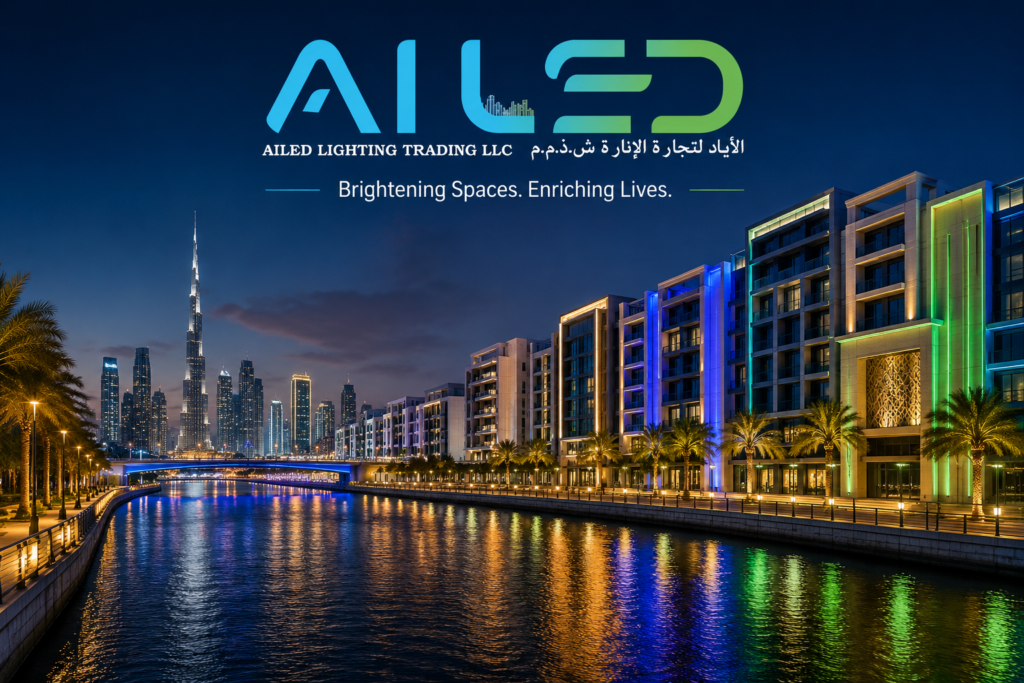
In this guide, we explore 7 smart
facade lighting trends
for sustainable buildings in 2025 and explain how these technologies are influencing contemporary architectural lighting.- Smart LED Facade Lighting
One of the strongest Modern facade lighting trends is the increased adoption of intelligent LED systems.
LED technology gives architects and lighting designers greater flexibility when developing exterior lighting concepts. Fixtures are available in different sizes, beam angles, colours, and formats, making them suitable for everything from subtle architectural accents to large-scale building illumination. Learn more about facade lighting solutions in Dubai.
Smart LED systems can also be programmed according to specific requirements. Brightness, colour, timing, and lighting scenes can be adjusted through centralized controls.
For example, a commercial property could use soft white illumination during regular operating hours and switch to a customized colour scheme during festivals, corporate events, or special occasions.
This combination of efficiency, flexibility, and control makes smart LED lighting an attractive option for modern architectural projects.
AILED Lighting provides specialized lighting solutions that can be customized according to architectural requirements, project objectives, and outdoor applications.
- Energy-Efficient Facade Lighting Solutions
Sustainability is becoming an increasingly important factor in building design. As businesses and property developers look for ways to reduce operational costs, energy-efficient lighting is receiving greater attention.
Modern LED fixtures can provide strong illumination while using less energy than many conventional lighting technologies. When LED systems are combined with intelligent controls, the efficiency of the overall installation can be improved further.
A sustainable facade lighting design may include:
High-efficiency LED fixtures
Programmable lighting schedules
Automatic dimming
Motion sensors
Daylight sensors
Smart control systems
Efficient power management
Targeted architectural illumination
Rather than operating every fixture at maximum output throughout the night, smart systems can adjust illumination according to time, usage, and project requirements.
This helps create a balance between architectural impact and responsible energy consumption.
- Dynamic and Interactive Facade Lighting
Buildings no longer have to maintain the same appearance every night. Dynamic lighting technology allows facades to change colours, patterns, brightness levels, and lighting scenes.
RGB and RGBW LED systems can be used to create customized visual effects. Depending on the control system, lighting scenes can be programmed for festivals, public celebrations, brand campaigns, seasonal events, or special occasions.
Dynamic lighting can be particularly effective for:
Hotels and resorts
Shopping centres
Corporate offices
Entertainment venues
Cultural buildings
Retail developments
Landmark properties
Event destinations
In facade lighting Dubai projects, dynamic illumination can help a property create a stronger visual presence within a highly competitive architectural environment.
The key is to use dynamic effects strategically rather than making the entire building unnecessarily bright.
- Minimalist Modern Facade Lighting Design
Not every building requires dramatic or colourful illumination. One of the growing Facade Lighting Trends is the use of clean, minimal lighting that works together with the architecture.
Instead of covering large areas with excessive fixtures, designers can focus on selected architectural characteristics.
Lighting can be positioned to emphasize:
Building columns
Vertical structures
Windows
Entrance areas
Rooflines
Textured walls
Architectural patterns
Decorative elements
This approach creates a sophisticated nighttime appearance while allowing the architecture itself to remain the main focus.
Modern facade lighting is particularly effective when lighting decisions are considered during the architectural planning stage. The fixture placement, beam direction, colour temperature, and intensity can then be designed to complement the building instead of appearing as an addition.
- Combining Exterior Facade and Landscape Lighting
A building should not always be treated as an isolated structure when developing a nighttime lighting concept.
Combining exterior facade lighting with landscape lighting can create a more complete visual experience across an entire property.
Landscape lighting can be used for:
Trees
Gardens
Walkways
Driveways
Water features
Sculptures
Outdoor seating areas
Building entrances
For example, a hotel can combine illuminated architectural walls with carefully positioned garden lights and pathway lighting. This creates a visual connection between the structure and its surrounding landscape.
This approach is useful for villas, resorts, hotels, commercial properties, residential communities, and large developments.
A well-designed lighting plan considers the entire site rather than focusing only on the building facade.
- LED Screen Lighting and Media Facades
Digital technology is creating another exciting direction in architectural illumination: media facades and LED screen lighting.
Instead of using a building only as an architectural structure, sections of the facade can become digital communication surfaces.
Depending on the application, LED systems can display:
Brand campaigns
Digital artwork
Event announcements
Animations
Promotional content
Public information
Seasonal visuals
Interactive experiences
This type of technology can be especially useful for shopping malls, entertainment destinations, commercial buildings, and high-profile developments.
However, successful media facade design requires careful control. Excessive brightness, unsuitable content, or poor scheduling can reduce the architectural quality of the building and increase energy consumption.
The ideal approach is to combine digital visibility with appropriate brightness, content management, energy efficiency, and architectural design.
- Automated Lighting and Smart Controls
Automation is becoming a major component of modern facade lighting systems.
Instead of manually switching outdoor fixtures on and off, intelligent control systems can manage different lighting zones according to schedules, sensors, and programmed scenes.
A smart lighting system can be configured to:
Turn lights on around sunset
Reduce brightness during late-night hours
Switch between predefined lighting scenes
Turn off selected areas when they are not required
Create special lighting programs for events
Control multiple lightingzones centrally
For large commercial and architectural developments, centralized controls can make lighting management considerably easier.
Automation can also help prevent unnecessary illumination and support better energy management.
Types of Facade Lighting
Understanding the Types of facade lighting available is important before selecting a solution for an architectural project.
Different techniques create different visual effects, so the appropriate method depends on the building’s structure, surface material, viewing distance, and design objective.
Wall Washing
Wall washing creates broad illumination across a relatively large surface.
It is useful when the objective is to make an entire architectural wall or building section visible after dark.
Grazing
Grazing involves positioning the light source close to a surface.
This technique is particularly effective for materials with texture, such as stone, brick, concrete, and decorative architectural finishes.
The light highlights the surface details and creates depth.
Linear Lighting
Linear LED fixtures can be integrated along architectural edges, structural lines, rooflines, and other features.
This creates a clean and contemporary appearance that works particularly well with modern buildings.
Uplighting
Uplighting places fixtures near ground level and directs light upward.
It can be used for columns, walls, trees, entrance structures, and other vertical elements.
Downlighting
Downlighting directs light from an elevated position toward the ground or selected architectural areas.
It can be useful around entrances, pathways, walkways, and exterior architectural features.
Silhouette or Backlighting
Backlighting can be used to create an outline around architectural structures, signage, sculptures, or landscape elements.
It produces a dramatic effect by emphasizing the shape rather than directly illuminating the object.
Selecting the right technique depends on the architectural material, structure, surroundings, desired mood, and viewing perspective.
Facade Lighting Trends in Dubai
Dubai continues to be recognized for its contemporary architecture, luxury developments, hospitality destinations, and highly visible commercial properties.
As a result, facade lighting trends in Dubai are increasingly combining visual design with technology, energy management, and customization.
Modern projects may incorporate:
Smart LED systems
Dynamic architectural illumination
Linear LED fixtures
Automated controls
RGB and RGBW lighting
Media facade technology
Landscape lighting
Customized lighting scenes
Energy-efficient exterior lighting
The objective of facade lighting Dubai projects should not simply be to make a building brighter.
Instead, lighting should communicate the architectural character of the property while creating an attractive and memorable appearance after dark.
Outdoor fixtures also need to be selected according to the project’s environmental conditions, installation requirements, maintenance needs, and expected performance.
How to Select the Right Facade Lighting Solution
Choosing a suitable lighting system requires more than selecting attractive fixtures.
The lighting strategy should be developed according to the building, project objectives, operating conditions, and available budget.
- Study the Architecture
First, evaluate the building’s structure, materials, textures, windows, columns, entrances, and distinctive features.
Understanding the architecture helps determine where illumination will have the greatest visual impact.
- Define the Objective
Decide what the lighting needs to achieve.
The purpose could be:
Architectural enhancement
Brand visibility
Security
Wayfinding
Entertainment
Property identification
Event-based lighting
- Prioritize Energy Efficiency
Choose efficient LED fixtures and consider dimming, scheduling, and automated controls.
This can help maintain the desired appearance without unnecessary energy consumption.
- Consider Outdoor Conditions
Exterior fixtures must be appropriate for the project’s environmental conditions.
Protection ratings, fixture durability, installation location, and exposure to weather should all be considered.
- Plan for Maintenance
Lighting equipment should be accessible for inspection, cleaning, servicing, and replacement.
A visually impressive lighting system may become difficult to manage if maintenance requirements are ignored during the design stage.
- Establish the Budget
The facade lighting solutions cost can differ considerably from one project to another.
Building size, fixture quantity, installation complexity, control technology, customization, and maintenance requirements can all influence the overall investment.
Facade Lighting Solutions Cost: What Affects the Price?
There is no fixed price for every facade lighting project because each building has different requirements.
The overall facade lighting solutions cost may depend on:
Number of fixtures
Fixture quality
LED technology
Building height
Installation difficulty
Electrical infrastructure
Cabling requirements
Lighting control systems
RGB/RGBW functionality
Automation
Custom lighting scenes
Maintenance accessibility
Project-specific design requirements
For example, a small commercial property using basic wall-washing fixtures will have very different requirements from a high-rise development using a large number of individually controlled RGBW fixtures.
Therefore, a project-specific assessment is generally a better way to determine the appropriate lighting budget than relying on a standard fixture price.
Why Sustainable Facade Lighting Is Important
Sustainable lighting is not limited to simply reducing electricity consumption.
A genuinely efficient lighting strategy considers fixture performance, operating schedules, brightness levels, automation, maintenance, and the overall design concept.
A simple approach is:
Efficient LEDs + smart controls + appropriate brightness + strategic illumination = more responsible lighting
Rather than illuminating every part of a building equally, designers can concentrate light on the architectural elements that deserve attention.
This can create a stronger visual effect while avoiding unnecessary illumination.
Sustainable facade lighting therefore provides an opportunity to combine aesthetics and practical performance.
The Future of Facade Lighting
The future of Façade lighting is expected to become increasingly intelligent, connected, and customizable.
Lighting systems are already moving toward automated controls, programmable scenes, responsive technologies, and more flexible LED solutions.
The integration of:
Facade lighting
Landscape lighting
Smart controls
Dynamic LEDs
LED screen lighting
Architectural design
is creating new opportunities for buildings to communicate visually after sunset.
For property developers and businesses, lighting is no longer simply about visibility. It can become part of the property’s identity and help create a recognizable nighttime presence.
Facade Lighting Solutions for Modern Buildings
Modern projects require lighting that can balance appearance, efficiency, technology, and long-term usability.
Whether the project involves a commercial building, hotel, residential development, retail property, villa, or landmark structure, the lighting concept should be developed around the specific architecture.
For projects searching for Facade Lighting Solutions near me, it is important to work with a provider that understands the technical and design requirements of exterior architectural lighting.
A properly planned system can help create an impressive facade without relying on excessive brightness or unnecessary fixtures.
Why Choose AILED Lighting?
AILED Lighting provides lighting solutions for architectural, commercial, exterior, and outdoor applications.
The right lighting concept can transform a building’s nighttime appearance while supporting practical requirements such as energy efficiency, controllability, durability, and maintenance.
From modern facade lighting and exterior illumination to landscape lighting and specialized LED systems, a customized approach can help achieve the right balance between architectural aesthetics and technical performance.
For projects in Dubai and other locations, professional lighting planning can help determine suitable fixtures, lighting techniques, control systems, and installation requirements.
Conclusion
The 7 Smart Facade Lighting Trends for Sustainable Buildings in 2025 show how architectural lighting is evolving from basic exterior illumination into a combination of design, technology, automation, and energy-conscious planning.
Smart LEDs, sustainable lighting systems, dynamic facades, minimalist designs, landscape integration, LED screen technology, and automated controls are giving architects and property owners more ways to create distinctive nighttime environments.
The latest Facade Lighting Trends are not simply about making buildings brighter. They are about highlighting architectural features, creating visual identity, improving the nighttime experience, and managing lighting intelligently.
Whether you are planning a new development or upgrading an existing property, AILED Lighting can help you explore customized facade, exterior, landscape, and LED lighting solutions based on your project requirements.