
Introduction
LED beam angle can influence how people perceive a building long before they notice its architectural details. At night, light becomes part of the building’s visual identity, influencing its proportions, surface appearance, and relationship with the surrounding environment. A carefully planned lighting installation can make an ordinary structure look distinctive, while poorly distributed light can hide the very details that make a design special.
For commercial developments, hotels, retail spaces, and contemporary properties, exterior lighting needs to do more than make a building visible. It should communicate the character of the architecture. Understanding how LED beam angle affects light distribution helps lighting designers develop installations that complement the building rather than overpower it.
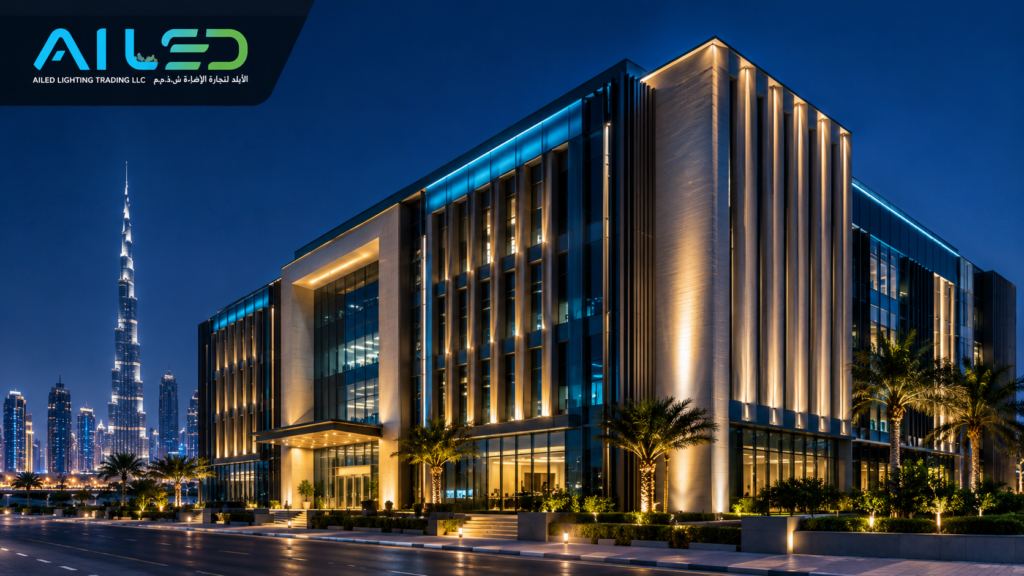
Why Buildings Look Different Under Artificial Lighting
During daylight, sunlight naturally reveals a building’s shape, texture, and materials. After sunset, artificial lighting becomes responsible for presenting those features.
The direction and spread of light influence which areas attract attention. A surface receiving concentrated illumination may appear prominent, while a neighbouring area with softer lighting creates a visual transition. These differences influence how the building is perceived from streets, public spaces, and nearby properties.
An LED beam angle contributes to this visual relationship by influencing the distribution of light from each fixture. Its effect depends on the fixture’s optical design, output, position, and the surface receiving the illumination.
The objective is to create a nighttime appearance that respects the building’s original architecture.
LED Beam Angle and the Visual Identity of Architecture
Making Modern Buildings Look More Defined
Contemporary buildings often feature geometric patterns, projecting frames, recessed windows, and repeated vertical or horizontal elements. These details can lose their visual definition when the entire exterior receives similar illumination.
A controlled lighting arrangement can emphasise selected structural lines and create a clearer distinction between different parts of the building. The resulting appearance may feel more organised and visually distinctive without requiring excessive brightness.
The choice of LED beam angle should reflect the size and position of each feature rather than follow a uniform specification throughout the project.
Giving Commercial Properties a Distinctive Nighttime Presence
Commercial buildings frequently serve as visual landmarks within business districts and shopping areas. Their nighttime appearance can contribute to how visitors recognise the property and understand its architectural character.
Lighting designers can use different distributions to establish a visual hierarchy. Entrance structures may receive focused illumination, while larger surrounding surfaces remain more subdued. This arrangement helps guide attention towards important areas without making the entire building compete for attention.
For retail developments and hospitality properties, the lighting concept should also consider viewing distances, pedestrian movement, and the appearance of the building from different directions.
Revealing Texture Without Overwhelming the Surface
Exterior materials respond differently to directional lighting. Stone, concrete, brickwork, metal panels, and decorative finishes each have their own visual characteristics.
When light reaches a textured surface from an appropriate direction, small variations in the material can become more visible. If the illumination is too uniform, those details may appear less pronounced.
The beam distribution, mounting position, and direction of illumination must work together to produce the intended effect. This is particularly important when the objective is to reveal texture rather than simply brighten a wall.
The Relationship Between Beam Distribution and Visual Comfort
A successful architectural lighting project should look attractive from multiple viewpoints, not just from directly in front of the building.
Preventing Uncomfortable Bright Spots
A fixture can create a distracting bright spot when its light is concentrated on a small area or aimed incorrectly. Such spots can interrupt the visual flow of an otherwise carefully designed exterior.
Lighting professionals should evaluate the relationship between the fixture’s output, its distribution pattern, the distance to the target, and the surrounding surfaces. Appropriate aiming and optical accessories can help control the final appearance.
Reducing Distraction Around Windows and Public Areas
Building exteriors often contain reflective glazing, balconies, entrances, and pedestrian zones. Light directed towards these areas may create reflections or unwanted brightness.
An effective lighting layout considers where the light should fall and where it should not. Shielding, fixture positioning, and suitable optics can help reduce unwanted spill while maintaining the intended architectural effect.
This approach is valuable for properties located near roads, residential buildings, and busy public spaces.
Why Lighting Designers Should Evaluate More Than the Beam Specification
The beam angle alone cannot determine whether a fixture is suitable for a project. Two fixtures with similar nominal beam angles may produce different results because of differences in optical construction, luminous output, and light distribution.
Several additional factors should be assessed before a product is selected.
Intensity Distribution
The way luminous intensity is distributed across a beam affects the appearance of the illuminated surface. Some fixtures produce a more concentrated central area, while others offer a more gradual distribution.
Reviewing photometric information can help designers understand how a fixture is likely to perform under the intended installation conditions.
Colour Consistency
A building may require several fixtures to illuminate adjoining sections of the same facade. Differences in colour appearance between fixtures can become noticeable when those sections are viewed together.
Consistent colour specifications and appropriate product selection help maintain a unified appearance across the installation.
Mounting Position and Viewing Direction
The same fixture can produce different visual results when its mounting position changes. A light installed close to a wall behaves differently from one mounted farther away or directed across the surface at an angle.
Lighting plans should therefore consider fixture locations, aiming directions, surrounding obstructions, and the viewpoints from which the building will be seen.
Applying LED Beam Angle Planning to Dubai’s Building Projects
Dubai’s architectural environment includes illuminated office buildings, hospitality developments, retail destinations, residential towers, and landscaped properties. Each project has different objectives, ranging from emphasising a building’s height to creating a welcoming entrance or revealing decorative materials.
In high-rise developments, the visual effect must remain coherent across multiple floors. In hospitality projects, lighting may need to support the building’s identity whilemaintaining comfortable conditions around entrances and outdoor seating areas. Residential properties may require a more restrained approach that complements gardens and surrounding structures.
For these applications, architectural lighting design in Dubai should account for local environmental conditions, installation access, fixture durability, glare management, and energy requirements.
A well-developed lighting concept connects product specifications with the actual experience of viewing the building at night.
How AILED Lighting Company Dubai Can Contribute to Better Lighting Planning
AILED Lighting Trading LLC works in the lighting solutions sector, where selecting suitable products for architectural and exterior applications requires attention to both technical performance and design objectives.
For developers, consultants, contractors, and property owners, the first step is to define what the lighting installation should achieve. This might involve highlighting a distinctive architectural element, improving the appearance of an exterior surface, or establishing a consistent lighting identity across a commercial property.
AILED Lighting Company Dubai can be considered when evaluating lighting options for projects that require a coordinated approach to exterior illumination.
Before finalising a specification, project teams should review photometric data, product suitability, installation requirements, colour consistency, and the intended distribution of light. Where necessary, a lighting simulation or on-site mock-up can help validate the design.
These checks support informed product selection and help ensure that the final installation reflects the architectural vision.
Conclusion
The nighttime identity of a building depends on more than the quantity of light installed across its exterior. The way light is distributed determines which features become noticeable, how materials are perceived, and whether the overall appearance feels balanced.
LED beam angle is an important part of this process because it influences the relationship between each fixture and the surface it illuminates. When considered alongside optical performance, fixture positioning, colour consistency, and visual comfort, it becomes a valuable element of architectural lighting planning.
For projects in Dubai, thoughtful lighting design can help commercial and residential buildings establish a distinctive nighttime presence while avoiding unnecessary brightness and distracting light spill.
AILED Lighting Trading LLC can help project teams explore suitable lighting options for their requirements. The ultimate goal is to create an exterior lighting scheme that respects the architecture, serves its surroundings, and gives the building a recognisable identity after dark.
Frequently Asked Questions
- How does LED beam angle affect a building’s nighttime appearance?
It influences how light spreads across architectural surfaces and affects the visibility of structural details, material textures, and illuminated areas.
- Can LED beam angle change the perceived size of a building?
Lighting distribution can influence visual emphasis and the way architectural proportions are perceived. However, the effect also depends on fixture placement, brightness, contrast, and the building’s design.
- Why is photometric data important when selecting facade lighting?
Photometric data helps lighting professionals evaluate a fixture’s light distribution and intensity, supporting more accurate lighting calculations and fixture placement.
- How can architectural lighting reduce unwanted glare?
Careful aiming, appropriate optics, shielding, and suitable fixture positioning can help limit direct glare and prevent light from reaching unintended areas.
- Where can I explore architectural lighting solutions in Dubai?
Contact AILED Lighting Trading LLC to discuss your project’s requirements and explore lighting options suitable for architectural and exterior applications.